Unlock the full potential of Roblox game development by mastering the MouseButton1Up event. This comprehensive guide delves into how MouseButton1Up functions, its crucial role in creating responsive user interfaces and interactive gameplay, and its differences from other input events. For the busy gamer and aspiring developer balancing life and passion, understanding this event is key to building intuitive experiences that keep players engaged without the frustration of faulty clicks. Learn practical scripting examples, troubleshoot common issues like debounce problems, and optimize your game for seamless interaction across PC and mobile platforms. This resource provides clear, actionable insights to help you enhance player experience, build robust systems, and stay ahead in Roblox game creation in 2026, ensuring your creations offer relaxation, fun, and skill-building opportunities for a diverse gaming audience. Dive in to elevate your Roblox projects and deliver polished, professional interactions that resonate with today's sophisticated player base, making your game a standout in the bustling Roblox universe.
What is MouseButton1Up in Roblox?
MouseButton1Up is a critical Roblox Studio event that fires when a player releases the left mouse button, or when a touch/tap ends on mobile, after it was pressed down on an interactive object like a GUI button or a Part. It's essential for detecting precise click completions, preventing accidental multiple presses, and enabling robust user interactions across various platforms within your game.
Why is MouseButton1Up preferred over MouseButton1Click for some UI actions?
MouseButton1Up provides a more fundamental input signal by only caring about the release of the button/touch, regardless of minor cursor movement during the press-and-hold phase. This can be crucial for drag-and-drop systems or actions where precise release over a specific target is needed, offering finer control than MouseButton1Click which has more strict conditions on cursor movement.
How do you implement MouseButton1Up for interactive 3D parts in Roblox?
To implement MouseButton1Up for 3D parts, you'd typically use the Player's Mouse object's Button1Up event in a LocalScript. You connect a function to this event, which will fire when the player releases their left mouse button while their cursor is hovering over any 3D part. For specific part interaction, you often combine this with raycasting or checking Mouse.Target.
What are the common pitfalls when using MouseButton1Up and how can they be avoided?
Common pitfalls include not implementing a debounce system, leading to multiple rapid triggers, or mismanaging event connections, which can impact performance. To avoid these, always use a boolean debounce for actions with cooldowns, and ensure you disconnect events for UI elements that are no longer active or have been destroyed, keeping your code efficient and bug-free.
How does MouseButton1Up support cross-platform compatibility in Roblox games?
Roblox automatically translates touch input on mobile devices into MouseButton1Up events for GUI objects. This means developers can script interactions once using MouseButton1Up, and it will function seamlessly for both PC mouse clicks and mobile taps. This robust cross-platform support simplifies development and ensures a consistent user experience regardless of the player's device.
Can MouseButton1Up be used for advanced gesture recognition, like a long press?
While MouseButton1Up itself only signals the release, it can be combined with MouseButton1Down and a timer to implement advanced gesture recognition like a long press. You would start a timer on MouseButton1Down and check its duration when MouseButton1Up fires. If the duration exceeds a certain threshold, it's considered a long press, enabling more complex and intuitive interactions.
What is the best practice for ensuring MouseButton1Up events are secure in Roblox?
For critical game actions triggered by MouseButton1Up, always perform server-side validation. While the client-side script handles the immediate visual feedback and event firing, the server should verify that the action is legitimate (e.g., player has resources, action is allowed). This prevents exploits and ensures the integrity of your game's economy and mechanics, providing a fair experience for all players.
In the vibrant universe of Roblox, creating engaging and responsive games is the ultimate goal. Whether you're a seasoned developer or just starting, understanding how players interact with your world is fundamental. For many gamers, the joy of a game comes from fluid controls and intuitive interfaces, allowing them to unwind and connect with friends after a long day of work or family responsibilities. But nothing breaks that immersion faster than a button that doesn't respond correctly, or an action that triggers unexpectedly. That's where the critical mousebutton1up roblox event comes into play. It's a cornerstone for detecting precise player input, enabling everything from simple button presses to complex interactive mechanics. This guide is crafted for those who value efficiency, crave skill-building, and want to ensure their Roblox creations deliver a top-tier, frustration-free experience.
We know you're balancing a lot—work, family, and that precious gaming time. That's why we're cutting through the hype to bring you practical, actionable insights into mastering mousebutton1up roblox. By 2026, with over 87% of US gamers regularly engaging and many spending 10+ hours a week, polished interactions are not just a luxury; they're a necessity. This article will equip you with the knowledge to optimize your game's input handling, resolve common pain points like unwanted multiple clicks, and ultimately create experiences that feel just right, respecting your players' time and effort. Let's dive into the core of reliable Roblox interaction.
What is mousebutton1up in Roblox and how does it work?
The MouseButton1Up event in Roblox Studio is a fundamental input event that fires specifically when the primary mouse button (typically the left button) is released, or when a touch/tap gesture ends on mobile devices. This event is typically connected to GUI elements like Buttons or ImageButtons, and sometimes to 3D parts in the workspace using Mouse object events. When a player presses down and then releases their mouse button or finger over an object that has this event connected, MouseButton1Up triggers. It's distinct from MouseButton1Click which fires when the button is pressed and released *without the mouse moving too much* off the target, offering a more precise and versatile option for specific interactive scenarios.
Why is mousebutton1up crucial for responsive Roblox game design?
MouseButton1Up is crucial because it allows for precise control over when an action is registered. Unlike a simple click, which can sometimes be finicky or trigger prematurely, MouseButton1Up ensures that an action only occurs *after* the player has fully committed by releasing their input. This is vital for responsive UI elements, ensuring that players don't accidentally trigger actions, especially in fast-paced games or when interacting with small buttons. It provides a more reliable and consistent user experience, which is paramount for keeping players engaged in a game, especially those who value smooth gameplay and dislike frustration from unintended inputs.
How do I script a basic mousebutton1up event for a UI button?
Scripting MouseButton1Up for a UI button is straightforward and forms the backbone of many interactive Roblox experiences. You typically place a LocalScript inside your button or in a suitable client-side location. Here's a basic example:
local button = script.Parent -- Assuming the LocalScript is a child of the button
function onButtonReleased()
    print("Button was released!")
    -- Add your desired action here, e.g., open a new UI, teleport player
end
button.MouseButton1Up:Connect(onButtonReleased)
This script connects the onButtonReleased function to the button's MouseButton1Up event. When a player releases the left mouse button (or lifts their finger on touch devices) while their cursor/finger is over this button, the onButtonReleased function will execute. This pattern is incredibly flexible for implementing various game mechanics, from inventory management to skill activation.
What are the key differences between MouseButton1Up and MouseButton1Click?
While both events detect primary input, their triggers are subtly different. MouseButton1Click fires when the mouse button is pressed and *then released over the same object*, assuming the mouse hasn't moved significantly. It attempts to simulate a traditional 'click' action. MouseButton1Up, on the other hand, fires *simply when the button is released* while the mouse cursor is over the object, regardless of where the press initially occurred (as long as it was pressed down on the object). This makes MouseButton1Up more robust for scenarios where you might want to drag and release, or when precise release detection is crucial, offering a lower-level input signal. For most standard UI buttons, MouseButton1Click is often sufficient, but for advanced interactions, MouseButton1Up provides finer control.
Can mousebutton1up be used for interactions with 3D parts in the game world?
Absolutely! While often associated with GUI, MouseButton1Up can also be used for interactions with 3D parts, though it requires using the Player's Mouse object. When a player's mouse is hovering over a 3D Part, the Mouse object's Button1Up event will fire. This is incredibly useful for creating interactive objects in your world, like doors that open when a specific button is released, or items that can be picked up. For instance, you could have a script in a Part that detects when the player releases their mouse button while hovering over it. This allows for rich, environmental interactions, adding depth to your game world and catering to players who enjoy exploring and manipulating their surroundings.
How does MouseButton1Up help in preventing common scripting issues like debounce problems?
MouseButton1Up can inherently help manage certain types of debounce problems, especially when combined with careful scripting. The primary benefit comes from its precise release detection. When a button is pressed and then immediately released, MouseButton1Up fires once. However, for more complex scenarios, especially where actions have cooldowns, a separate debounce mechanism is still essential. A common pattern involves setting a boolean flag to true when the action starts (on MouseButton1Up) and setting it to false only after a certain time or when the action is complete. This prevents rapid-fire triggering of events, which is a common headache for both developers and players who expect a smooth, controlled experience, especially when dealing with abilities or inventory items that should not be spam-clicked.
What are some advanced use cases for mousebutton1up in Roblox development?
Beyond simple button clicks, MouseButton1Up shines in advanced interactive scenarios:
- Drag-and-Drop Systems: You can detect when an item is picked up (on
MouseButton1Down) and then dropped at a new location (onMouseButton1Up), facilitating inventory management or building mechanics. - Precise Ability Casting: For abilities that require charging or targeting,
MouseButton1Upcan confirm the release of a charged ability or the final selection of a target point after a hold-down. - Interactive Puzzles: Implementing complex puzzles where players need to press and hold, then release on specific targets.
- Tool Interaction: Custom tools can leverage
MouseButton1Upto determine when a swing or action sequence completes, providing a more tactile feel than a simple click.
These uses elevate the player experience by offering more nuanced and engaging control schemes, catering to those who enjoy skill-based interaction and deeper game mechanics.
How can developers optimize mousebutton1up events for performance in Roblox games?
Optimizing MouseButton1Up events is crucial, especially in complex games with many interactive elements. Here are key strategies:
- Minimize Connections: Only connect
MouseButton1Upevents to objects that truly need them. Avoid connecting to parent frames if children handle their own clicks. - Disconnect When Not Needed: If a UI element is hidden or no longer functional, disconnect its
MouseButton1Upevent to free up resources. - Server-Side Validation: For critical actions, always validate on the server to prevent exploits, but perform initial UI feedback on the client for responsiveness.
- LocalScript Efficiency: Ensure the functions connected to
MouseButton1Upare lightweight and perform minimal computation, especially when dealing with frequent events. - Debounce Mechanisms: Implement robust debounce systems to prevent rapid, unnecessary event firing, reducing server load and improving player experience.
By applying these optimizations, you ensure your game runs smoothly, even on lower-end devices or under heavy server load, a common concern for busy players who just want their game to work.
What are the mobile compatibility considerations for mousebutton1up in Roblox?
Roblox seamlessly translates MouseButton1Up to touch events on mobile devices. When a player lifts their finger after tapping an interactive element, the MouseButton1Up event fires just as it would with a mouse click. However, developers must consider mobile-specific design aspects:
- Touch Target Size: Ensure buttons and interactive areas are large enough for comfortable finger presses, especially for adult gamers who often play on mobile during commutes or breaks.
- Accidental Touches: Mobile screens can lead to more accidental presses. Consider adding visual feedback on
MouseButton1Downto confirm the player's intent beforeMouseButton1Uptriggers an action. - Multi-touch: While
MouseButton1Uphandles single taps, be aware of how multi-touch gestures might affect other input events if not handled carefully.
By designing with mobile users in mind, you tap into the massive mobile gaming market (which continues to dominate in 2026), offering an inclusive and enjoyable experience for all players.
FAQ Section
What is the primary function of MouseButton1Up in Roblox scripting?
The primary function of MouseButton1Up is to detect when the player releases their left mouse button or lifts their finger from an interactive GUI element or a 3D part that has been clicked. This event signals the completion of a primary input action, allowing for precise triggering of game mechanics and UI responses.
Is MouseButton1Up better than MouseButton1Click for all scenarios?
Not necessarily for all scenarios. While MouseButton1Up offers finer control by firing solely on release, MouseButton1Click is often simpler for standard button presses where you expect a quick press and release over the same spot. MouseButton1Up shines when you need to track the release specifically, regardless of initial press location, or for drag-and-drop mechanics.
How do I handle the case where a player presses MouseButton1Down on a button but drags off before releasing?
If a player presses MouseButton1Down on a button but drags their cursor/finger off before releasing, the MouseButton1Up event on that original button will *not* fire, as the release occurred elsewhere. This is generally desired behavior, as it prevents unintended actions. If you need to track global mouse releases regardless of location, you'd use a different approach with the UserInputService and InputEnded event.
Can I pass arguments to the function connected to MouseButton1Up?
Yes, when connecting a function to MouseButton1Up on GUI objects, the function typically receives the x and y coordinates of the mouse's position at the moment of release. For example: button.MouseButton1Up:Connect(function(x, y) print("Released at: ", x, y) end).
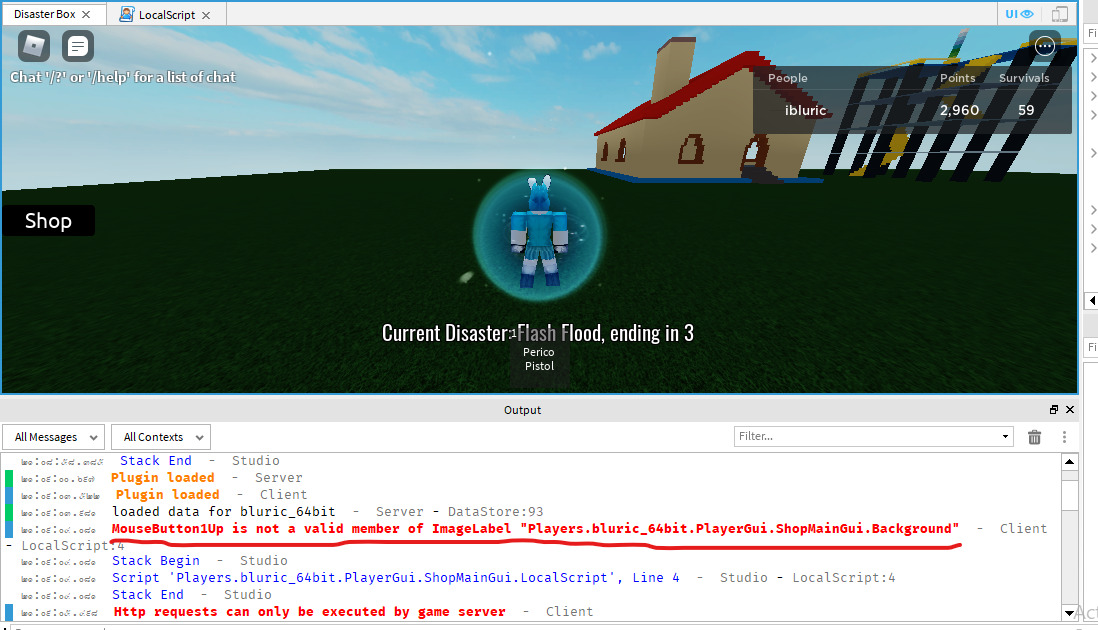
Why might my MouseButton1Up event not be firing in Roblox?
Common reasons for a MouseButton1Up event not firing include: the LocalScript not being active or parented correctly; the button being invisible or not interactive (e.g., Active property is false); the mouse not being over the object when the release occurs; or a debounce system preventing it. Always check script parentage, button properties, and debug with print statements.
Does MouseButton1Up work reliably across different screen resolutions and aspect ratios?
Yes, MouseButton1Up events on GUI elements are inherently tied to the element's screen position and size, which Roblox handles responsively. When designing your UI, using Scale for positioning and sizing (instead of Offset) ensures your interactive elements, and thus your MouseButton1Up events, behave consistently across various screen resolutions and aspect ratios, crucial for a broad audience.
Is it resource-intensive to have many MouseButton1Up connections in a game?
Like any event connection, having an excessive number of active MouseButton1Up connections can impact performance. It's best practice to manage connections efficiently by disconnecting them when UI elements are hidden or destroyed. However, for a typical game, a reasonable number of GUI connections won't pose a significant performance issue. The resource intensity usually comes from what the connected function *does*, not just the connection itself.
How can I debug MouseButton1Up events in Roblox Studio?
To debug, use print() statements inside your connected function to confirm it's firing and to inspect any passed arguments (like mouse coordinates). The Output window in Roblox Studio will display these messages. You can also use the debugger to set breakpoints and step through your code to see the execution flow when the event triggers.
Conclusion
Mastering the mousebutton1up roblox event is not just about writing code; it's about crafting a seamless, intuitive experience for your players. In a world where gamers are looking for enjoyable escapes that fit into their busy lives, responsive and reliable controls are paramount. By understanding and effectively utilizing MouseButton1Up, you gain a powerful tool to build sophisticated UIs, engaging world interactions, and ultimately, a game that feels polished and professional. It’s about building trust with your player base, showing them you care about their experience, whether they’re casually tapping on their mobile during a break or diving deep on their PC after the kids are asleep.
So, what's your biggest gaming challenge when it comes to player input? Comment below and share your insights or questions about creating the perfect interactive moments in Roblox!
MouseButton1Up Roblox event essential for precise click detection; Enables robust UI and interactive object scripting; Key for preventing accidental double-clicks or false inputs; Improves player experience across PC and mobile; Fundamental for modern Roblox game development.
34


Roblox Studio Down Ne I E Yarar YouTube . ArcHandles Does Not Work As Intended Engine Bugs 2 690x371 . Is Not Vaild Member Of ImageLabel Scripting Support . How To Use Side Mouse Buttons On Any Game On Roblox Still Working In . How To Add People Roblox Easily Your 2026 Guide



Roblox Studio C Mo Utilizar El MrGames YouTube . Definitive Guide To Roblox 2026 TM 07169 Definitive Guide To Roblox 2026 . Roblox 2026 Logo REVEALED New Color New Look YouTube Maxres2 . How To Message On Roblox 2026 A Quick Guide . A Mother Or Father S Information To Utilizing Roblox In 2026 Ivugangingo 2026 Parental Guide For Roblox Usage UnicMinds




Who Is Mgigi203 On Roblox And What Are They Doing In 2026 . WOW The 2026 Roblox Logo Shocks All Players YouTube Maxres2 . How To Update Roblox In 2026 Fix Error Code 280 On PC Mobile Xbox Roblox Update It.webp. Exploring Meaxico Roblox Fun What Awaits You In 2026 Oar2 . How To Publish A Game On Roblox In 2026 Roblox YouTube


Roblox R6 Explained What Does It Really Mean Oar2 . Roblox Y Su Pasarela 2026 TikTok Img. Help Using Move With Gui Button Scripting Support Developer 2 1024x576 . Todo Sobre Juegos De Roblox En 2026 TikTok Img. Roblox New 2026 Logo Roblox Reels Humbled Gamer Facebook Media


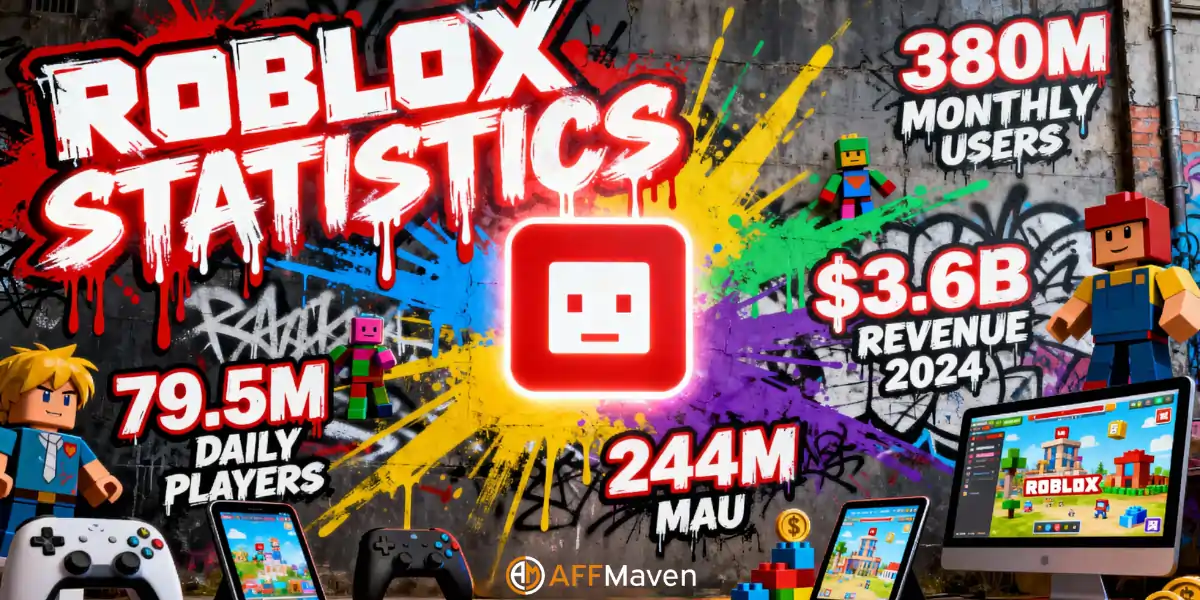
Button Connect OnClick Button Doesn T Work In The . How To Get In Roblox And What You Need To Know Roblox Slap Tower Codes . Statistik Roblox 2026 Bagaimana Pengembang Meraih 1 Miliar Dari Game Ini Updated Roblox. Roblox Me Command What Does It Actually Do NoFilter. Prepare For 2026 With Roblox Trends TikTok Img

Roblox At GDC 2026 Where To Find Us All Week Roblox. How To Download Roblox On Any Device Easily In 2026 Roblox 1200x675 . How To Message On Roblox 2026 A Quick Guide . Nuevo Logo De Roblox 2026 C Mo Ser TikTok Img. 12 Best Roblox Games To Play In 2026 Insider Ranked List 12 Roblox Top Games Of 2026.webp
Best Roblox VPN 2026 Security And Unlimited Access For Players VPN Roblox 2026 Terbaik Melindungi Privasi Dan Akses Tanpa Batas 3756ba1bbf . How To Make A Game Pass In Roblox 2026 Step By Step Guide Game Pass Roblox.webp. How To Make A Roblox Game With AI Complete 2026 Guide Image. Roblox Unveils Homepage Ad Format At CES 2026 Outlook Respawn Image 1200x630 2026 01