For many US gamers, balancing a passion for Roblox creation with daily responsibilities like jobs and family can be a challenge. You want to build amazing experiences efficiently, without getting bogged down by technical hurdles. The Roblox coupler is a crucial yet often overlooked component that can streamline your building process, making connections between parts smooth and reliable. This comprehensive guide will navigate the intricacies of Roblox couplers, offering practical tips, troubleshooting advice, and creative applications to elevate your building skills. Whether you are a seasoned builder looking to optimize performance or a newcomer eager to enhance your creations, understanding couplers is key to crafting immersive and interactive environments. Discover how mastering this simple tool can save you time, improve game performance, and unlock new creative possibilities, all while respecting your valuable gaming hours. Stay ahead of the curve in Roblox development by mastering this fundamental building block.
How do I create a working door in Roblox using a coupler?
To create a working door with a coupler in Roblox, you'll primarily use a HingeConstraint. First, model your door and its frame as separate parts. Insert a HingeConstraint into the door part. Create two Attachment objects: Attachment0 in the door at the hinge pivot point, and Attachment1 in the door frame at the corresponding hinge pivot. Assign these attachments to the HingeConstraint's properties. Configure the HingeConstraint's ActuatorType to Motor if you want it to open and close automatically via script, or set LimitsEnabled with a desired AngularLimits range for manual player interaction. Ensure CanCollide is appropriately set for both the door and frame to allow smooth movement without clipping.
What is the best way to connect vehicle parts with Roblox couplers?
Connecting vehicle parts in Roblox often involves a combination of couplers. For wheels, HingeConstraints are typically used for rotation, with one attachment at the wheel's center and another on the chassis. For suspension, SpringConstraints can be added between the chassis and wheel assembly. Steering mechanisms might use a HingeConstraint for turning and a PrismaticConstraint for linkage. The key is to break down the vehicle's movement into individual joint types and select the appropriate constraint for each, ensuring attachments are precisely aligned at pivot points. Scripting these constraints allows for responsive driving controls.
Can Roblox couplers break or detach during gameplay?
Yes, Roblox couplers can effectively "break" or detach during gameplay if their properties are configured in certain ways or if extreme physics forces are applied. For instance, a BreakableJoint property, if enabled, can cause a WeldConstraint or other joints to detach under sufficient force. Similarly, if a constraint's limits are exceeded repeatedly or parts collide with immense force, the physics engine might destabilize the connection. While couplers are generally robust, poor initial alignment, conflicting `CanCollide` settings, or unhandled scripting errors can also lead to unintended disconnections or glitchy behavior. Proper configuration and testing are essential to maintain connection integrity.
What are the common errors when setting up a HingeConstraint coupler?
The most common errors when setting up a HingeConstraint coupler usually revolve around attachment alignment and property configuration. Builders often misplace or incorrectly orient the Attachment objects, leading to the door or object rotating off-axis or failing to move at all. Another frequent mistake is not setting `Attachment0` and `Attachment1` correctly in the HingeConstraint's properties, or forgetting to enable `LimitsEnabled` if a specific range of motion is desired. Sometimes, the `ActuatorType` isn't set for automated movement, or `MotorMaxTorque` and `MotorVelocity` are too low to overcome the parts' mass. Lastly, ensure one part is anchored or connected to a stable base, otherwise the entire assembly might fall.
How can I animate objects using Roblox couplers and scripting?
Animating objects with Roblox couplers and scripting involves manipulating their properties, particularly `ActuatorType`, `MotorVelocity`, and `AngularLimits` (for Hinge) or `LinearVelocity` and `Limits` (for Prismatic). For example, to make a door swing open, set its HingeConstraint's `ActuatorType` to `Motor` and then script `HingeConstraint.MotorVelocity` to a positive or negative value to control the speed and direction. You can use `TweenService` to smoothly change these values over time for more fluid animations. Event listeners can trigger these animations, such as a player touching a part or clicking a button, bringing your interactive elements to life.
What is the difference between a `WeldConstraint` and a `RigidConstraint` in Roblox?
While both `WeldConstraint` and `RigidConstraint` create a rigid bond between parts in Roblox, their primary difference lies in their intent and internal mechanics, especially with newer updates. A `WeldConstraint` is the general-purpose, most commonly used method to permanently fuse two parts together, making them act as a single unit without relative movement. It's lightweight and efficient for static connections. A `RigidConstraint`, on the other hand, is a more foundational constraint, often used internally by the engine or for more specific, complex rigging scenarios where you need an unyielding, fixed connection without any degree of freedom. For most standard building tasks requiring a simple, permanent bond, `WeldConstraint` is the recommended and more straightforward choice, while `RigidConstraint` is for niche, advanced physics setups or when other constraint types are derived from a rigid base.
Are there any Roblox Studio plugins that assist with coupler placement?
Yes, several Roblox Studio plugins can significantly assist with coupler and attachment placement, making the process much more intuitive. Plugins like "Constraint Editor" or "Attachment Tools" by various community creators offer visual aids to easily create, move, and align `Attachment` objects and subsequently connect them to constraints. These tools often provide visual lines or gizmos that represent the constraint's axis or movement direction, greatly simplifying precise setup. Some even allow for bulk creation or modification of attachments. Searching the Roblox Creator Marketplace for "Constraint" or "Attachment" related plugins will yield many helpful options, often free, that streamline the workflow and reduce common errors, saving valuable development time.
For many US gamers, the thrill of diving into Roblox's expansive creation tools is a perfect way to unwind after a long day of work, managing family responsibilities, or simply escaping the daily grind. We know the feeling: you have limited time, but a burning desire to bring your imaginative worlds to life. You want to build amazing experiences, create engaging games for your friends, and optimize your creations without spending hours wrestling with technical glitches. This is where understanding fundamental tools like the Roblox coupler becomes absolutely crucial. With 87% of US gamers regularly dedicating 10+ hours a week to their passion, often across mobile and PC platforms, efficiency in building is more important than ever. The average gamer, around 36 years old, seeks relaxation and fun, but also values skill-building and efficient solutions. This comprehensive guide is designed for the modern gamer who values relaxation, skill-building, and smart solutions. We will demystify the Roblox coupler, a powerful yet often misunderstood component, helping you connect parts seamlessly, optimize your game's performance, and unlock new levels of creative freedom. Forget the hype and focus on practical knowledge that enhances your gameplay and building prowess, allowing you to maximize your precious gaming hours and build confidently, staying current with trends without falling for unnecessary hype. This month, creators are increasingly focusing on optimized builds, making coupler mastery more relevant than ever.
What exactly is a Roblox Coupler and why do I need it?
A Roblox coupler, often referred to more broadly as a constraint, is a specialized object used to define how two `BaseParts` interact with each other within your Roblox game world. Think of it as an invisible, intelligent connection that dictates specific parameters for movement or attachment. Unlike a simple weld that permanently fuses parts together, effectively making them one solid object, a coupler allows for controlled movement, rotation, or a secure yet potentially detachable connection between distinct parts. You absolutely need to understand and use couplers because they are fundamental for creating any dynamic and interactive elements in your builds. This includes functional doors that swing open, movable platforms that slide, complex vehicles with turning wheels, or even intricate character attachments and animated props. By providing flexibility and realism that basic welds cannot, couplers prevent your meticulously crafted builds from falling apart while simultaneously enabling the designed motion. This makes your games feel significantly more alive, professional, and less prone to the frustrating physics glitches often experienced when builds unexpectedly break during gameplay. Mastering this foundational building block ensures your creations are robust and engaging for players.
How do I effectively use a Roblox Coupler in my builds?
Effectively using a Roblox coupler involves a systematic approach, starting with selecting the correct constraint type and precisely configuring its properties. First, clearly identify the two distinct `BaseParts` you intend to connect. Next, navigate to the `Model` tab in Roblox Studio, click on `Constraints`, and insert the appropriate coupler constraint for your desired behavior. For instance, you might choose a `HingeConstraint` for rotational movement or a `PrismaticConstraint` for linear sliding. Crucially, you will need to create two `Attachment` instances: one embedded within each of the parts being connected. These attachments serve as the anchor points for your coupler. Drag and assign these `Attachment` objects into the `Attachment0` and `Attachment1` properties of the chosen constraint. The precise alignment and orientation of these attachments are paramount, as they define the pivot points, axes of movement, or connection origins. Finally, delve into the constraint's properties panel. Here, you can adjust settings like `ActuatorType` to control automated movement, `Limits` to define movement range, or `Spring` properties for elastic effects. Consistent testing in Studio is not just recommended, it's essential to verify that your coupler behaves exactly as intended, allowing for quick adjustments and preventing future headaches during gameplay. A systematic approach here saves significant time later.
- Identify the specific `BaseParts` you wish to connect dynamically.
- From the `Model` tab, insert the most suitable `Constraint` object (e.g., `HingeConstraint`, `PrismaticConstraint`) into one of the target parts.
- Create `Attachment` objects within both connected parts, precisely positioning them at the desired connection points.
- Assign these created `Attachment` objects to the `Attachment0` and `Attachment1` properties of your chosen constraint.
- Carefully adjust the various properties of the `Constraint` (such as `ActuatorType`, `Limits`, `Spring`, `CFrame` of attachments) to achieve the exact movement and behavior you envision for your connected parts.
- Thoroughly test your build in Roblox Studio's Play mode to confirm the coupler functions correctly and make any necessary refinements.
What are the different types of Roblox Couplers and their uses?
Roblox offers a rich array of coupler-like constraints, each meticulously designed for specific interaction types, and understanding their nuances is key to becoming an advanced builder. The most commonly utilized constraints, often informally referred to as "couplers," include: the `HingeConstraint`, which enables rotational movement around a single axis, perfect for creating functional doors, spinning wheels, or rotating fans; the `PrismaticConstraint`, designed for linear sliding movement along an axis, ideal for elevators, drawers, or sliding gates; the `CylindricalConstraint`, which combines both rotation and linear sliding along a single axis, offering versatility for complex machinery; and the `BallSocketConstraint`, providing universal rotational movement, much like a human hip joint, excellent for character limbs or flexible joints. While the `WeldConstraint` is often categorized here due to its connection function, it fundamentally creates a permanent, rigid bond, differing from the dynamic movement of other constraints. Other specialized constraints like `SpringConstraint` and `RopeConstraint` allow for elastic or flexible connections, adding another layer of realism. Each constraint type comes with a unique set of properties that allow you to fine-tune its behavior, enabling you to construct intricate mechanical systems, dynamic character rigs, or responsive user interface elements that truly elevate player engagement and immersion. The correct choice of constraint can drastically impact the realism and functionality of your interactive experiences.
How can I troubleshoot common Roblox Coupler issues?
Even the most experienced Roblox builders frequently encounter challenges with couplers, ranging from parts failing to connect to exhibiting erratic, unexpected movements. A primary troubleshooting step is to meticulously verify that both `Attachment0` and `Attachment1` are correctly assigned to the constraint and, perhaps more importantly, that the `Attachment` objects themselves are precisely aligned within their respective parts. Misaligned attachments are a notoriously frequent culprit for erratic behavior, causing parts to spin incorrectly or fail to move at all. Another critical check involves the `CanCollide` property; ensure it is appropriately set on all connected parts. Sometimes, parts are unintentionally set to collide when they should not, physically preventing the intended movement. Review the `Mass` and `Density` properties of your parts, as unusually heavy or excessively light objects can cause the Roblox physics engine to behave unpredictably, leading to glitches. Additionally, carefully re-examine the constraint's `ActuatorType` and `Limits` properties to confirm they precisely match your desired movement parameters. If all initial checks prove fruitless, try a systematic approach: temporarily disable the problematic constraint, or simplify the surrounding build to isolate the issue. The 'Dragger' tool in Studio can be incredibly helpful for visualizing attachments and their axes, providing a clear indication of any misalignment. Addressing these common pain points directly will save you countless hours of frustration and get your builds working smoothly.
- Verify `Attachment0` and `Attachment1` assignments: Ensure the correct attachments are linked to the constraint.
- Ensure precise alignment of `Attachment` objects: This is paramount; even slight misalignments can cause unexpected behavior. Use the `Dragger` tool to visualize axes.
- Check `CanCollide` property on all connected parts: If parts are colliding when they should be moving, disable `CanCollide` on one or both where appropriate.
- Examine part `Mass` and `Density` for physics anomalies: Unrealistic mass distribution can lead to physics glitches. Adjust these properties for stability.
- Review constraint `ActuatorType` and `Limits` settings: Confirm that these properties are configured to allow the specific type and range of movement you intend.
- Isolate the problem: Temporarily remove or simplify surrounding elements to pinpoint if the issue lies with the coupler itself or an interaction with other parts.
Are there performance considerations when using many Couplers?
Yes, absolutely. While Roblox's physics engine is remarkably robust and highly optimized, the computational cost associated with simulating a large number of complex constraints, like couplers, can indeed impact game performance. This effect becomes particularly noticeable on lower-end devices or when players are using mobile devices, which currently dominate a significant portion of the Roblox player base. Each active constraint requires continuous calculation by the game engine, so a game world populated with hundreds or even thousands of constantly moving, coupled parts is likely to experience performance degradation, commonly manifesting as lag or reduced frame rates. To mitigate this, consider optimization strategies. For static or infrequently moving objects, always prioritize using simpler `WeldConstraints` or even directly welding parts together within Roblox Studio if no relative movement is ever required. Additionally, strive to reduce the total number of unnecessary constraints and simplify overly complex physics interactions. Only employ advanced coupler features, such as `Actuators` or intricate `Limits`, where they are absolutely critical to gameplay functionality or visual fidelity. Organizing your parts with `Models` or `Folders` can certainly help manage your workspace and keep your hierarchy clean, but it's important to remember that this structural organization does not directly reduce the raw computational burden of the constraints themselves. The key is to strike a delicate balance between creating visually rich, interactive experiences and ensuring smooth, playable performance across a broad spectrum of hardware, especially given the rising trend of mobile gaming where optimization is paramount for player retention and satisfaction.
Can Couplers enhance social and interactive game elements?
Absolutely, couplers are fundamental tools for crafting rich, engaging, and highly interactive social experiences within Roblox, a platform where social play continues to be a driving force. Imagine a collaborative roleplay game where players construct a shared fort; couplers facilitate the assembly of moving parts like drawbridges, hidden passages, or even operable cannons. For instance, a thoughtfully placed `HingeConstraint` can create a functional gate in a bustling social hub, allowing players to control access or signal their presence. Similarly, `PrismaticConstraints` can power a working elevator in a multi-story hangout spot or enable a movable bridge that players must cooperate to extend across a chasm. These dynamic elements are not just decorative; they create tangible opportunities for player interaction, problem-solving, and communication. Couplers also enable interactive props in roleplay games, such as opening cupboards, operable cash registers, or adjustable furniture, making the virtual world feel more responsive and tangible. Even in quieter, cozy game experiences, subtle interactions provided by couplers, like opening and closing doors in a virtual home, enhance immersion and provide satisfying feedback. By allowing parts to move in predictable, player-driven ways, couplers significantly boost immersion and actively encourage social interaction, giving players more compelling and creative avenues to connect, collaborate, and play together. This directly taps into the ongoing trend of social gaming dominating platforms like Roblox, where community and interaction are king.
What are some advanced tips for mastering Roblox Couplers?
Mastering Roblox couplers truly goes beyond merely establishing basic connections; it involves leveraging their full potential for sophisticated mechanics. One highly effective advanced technique is the judicious use of the `ActuatorType` property, available on constraints like `HingeConstraint` and `PrismaticConstraint`. By setting `ActuatorType` to `Motor` and then carefully adjusting properties such as `MotorMaxTorque` and `MotorVelocity`, you can create powerful, automated movements. This allows you to script dynamic elements like doors that automatically open and close when a player approaches, or platforms that cycle through a specific path. Another invaluable tip is the strategic combination of multiple constraints to achieve complex behaviors; for example, you might pair a `BallSocketConstraint` for universal movement with a `SpringConstraint` to introduce dampening, elasticity, or recoil effects, simulating realistic suspension. Furthermore, consider integrating `AlignPosition` and `AlignOrientation` constraints for scenarios where parts need to "snap" precisely into place, providing a polished and satisfying user experience. The true power emerges when you learn to script these coupler properties dynamically using Lua. By tying constraint properties to player input, in-game events, or environmental triggers, you can unlock truly sophisticated and responsive interactions, transforming your builds from static constructions into spectacular, interactive showcases. This level of mastery is what differentiates casual builders from seasoned creators, allowing for unparalleled control over in-game physics and player experiences.
How do Roblox Couplers compare to other connecting tools like Welds?
When it comes to connecting parts in Roblox Studio, builders often encounter a choice between using various types of couplers (constraints) and simpler welding tools. While both ultimately connect parts, their fundamental functions and optimal use cases differ significantly. A `WeldConstraint` (or its older counterpart, a traditional weld) creates a rigid, permanent, and unbreakable bond between two `BaseParts`, effectively making them behave as if they were a single, monolithic object. This is the ideal choice for static structures, walls, floors, or any parts that should never move relative to each other within your game. For instance, connecting the individual bricks of a house or attaching a non-movable prop to a surface would typically utilize a weld. In stark contrast, Roblox couplers (such specifically named constraints like `HingeConstraint`, `PrismaticConstraint`, or `BallSocketConstraint`) are expressly designed for dynamic connections that explicitly allow for controlled movement. They establish a precise kinematic relationship between parts while preserving their individual physics properties. You would opt for a coupler when you need a spinning wheel on a vehicle, a sliding door that opens and closes, a vehicle's suspension system, or a character's articulated arm. The choice between a weld and a coupler hinges entirely on whether you need a static, immovable connection or a dynamic, movable joint. Generally, `WeldConstraints` are more performance-friendly for static objects due to their simpler computational overhead, while specific couplers introduce computational complexity in exchange for rich, interactive, and movable game elements. Understanding this distinction is crucial for both efficient building and optimal game performance, preventing unnecessary physics calculations for static objects and enabling complex mechanics where they are needed.
Where can I find resources to learn more about Roblox building?
For any dedicated Roblox builder, staying current with the platform's continuous evolution is paramount, especially with frequent updates introducing new tools and features. Your primary and most authoritative resource should always be the official Roblox Creator Hub (accessible at create.roblox.com). This comprehensive hub offers extensive, up-to-date documentation, step-by-step tutorials covering a vast range of topics, and an invaluable API reference that is meticulously maintained. For visual learners who prefer to see concepts in action, YouTube channels such as TheDevKing, AlvinBlox, and Peaspod provide excellent, easy-to-follow video tutorials that span everything from foundational building techniques to advanced scripting and intricate constraint usage. These channels often feature "this month" specific guides on emerging features or optimization strategies relevant to popular genres like social hangouts or tycoon games. Furthermore, actively participating in Discord communities dedicated to Roblox development can be incredibly beneficial. These communities offer a vibrant platform to ask specific questions, share your ongoing work to receive feedback, and learn directly from both experienced developers and fellow enthusiasts. Regularly exploring community forums, official developer blogs, and even keeping an eye on popular streamer channels will ensure your skills remain sharp and that you are consistently informed about the latest trends, best practices, and innovative techniques within the dynamic Roblox metaverse. This continuous learning approach is crucial for any gamer balancing life with a passion for creation.
The Roblox coupler, and indeed the broader family of Roblox constraints, might initially appear to be a small, technical detail. However, as we've explored, mastering these powerful tools is an absolute game-changer for any aspiring or experienced builder on the platform. From crafting complex, functional vehicles that navigate diverse terrains to designing highly interactive environments for engaging social play, understanding precisely how to connect parts dynamically and controllably is essential for creating compelling experiences that truly capture and retain player attention. We’ve meticulously covered everything from the fundamental setup and various types of couplers to advanced optimization techniques and effective troubleshooting strategies. This knowledge empowers you to tackle common building pain points head-on, ensuring you make the most of your valuable gaming and creation time. Remember, the true mark of a skilled builder is not just effort, but efficiency and smart design. By focusing on practical, effective techniques like proper coupler usage, you can confidently balance your passion for building with your everyday responsibilities. So, keep experimenting, keep learning, and most importantly, keep having immense fun in the boundless world of Roblox creation!
What's your biggest gaming challenge when building in Roblox? Comment below!
FAQ Section
What is the main difference between a Weld and a HingeConstraint? A Weld creates a rigid, permanent connection making parts act as one, while a HingeConstraint allows rotational movement between two parts, like a door swinging open.
Can I script Roblox couplers? Yes, you can absolutely script coupler properties like `MotorVelocity` or `Limits` to create dynamic, automated behaviors based on game events or player input, offering deep customization.
Do couplers work on mobile Roblox games? Yes, couplers are fundamental to Roblox's physics engine and function identically across all platforms, including mobile, ensuring consistent game behavior wherever players engage.
How do I prevent parts connected by a coupler from glitching through each other? Ensure the `CanCollide` property is set correctly for connected parts. Also, check their `Mass` and `Density` and adjust the coupler's `Limits` to prevent excessive movement causing overlap.
Are there free alternatives to custom couplers for simple connections? For basic rigid connections, `WeldConstraint` is a free and built-in option. For simple movements, the standard constraint objects are all free and available in Studio.
Roblox couplers are essential for creating dynamic, connected structures in your games. They enable parts to attach securely while allowing specific movements, crucial for vehicles, doors, and interactive objects. Understanding their properties, like strength and type (e.g., hinge, weld), prevents common building frustrations and improves game physics. Proper use enhances realism and player experience. This guide covers setup, common issues, and advanced applications for efficient building.
35


How To Add People Roblox Easily Your 2026 Guide . Roblox 2026 Logo REVEALED New Color New Look YouTube Maxres2 . New Years 2026 You VS Homer Roblox Wiki Fandom Latest. Who Is Mgigi203 On Roblox And What Are They Doing In 2026 . WOW The 2026 Roblox Logo Shocks All Players YouTube Maxres2


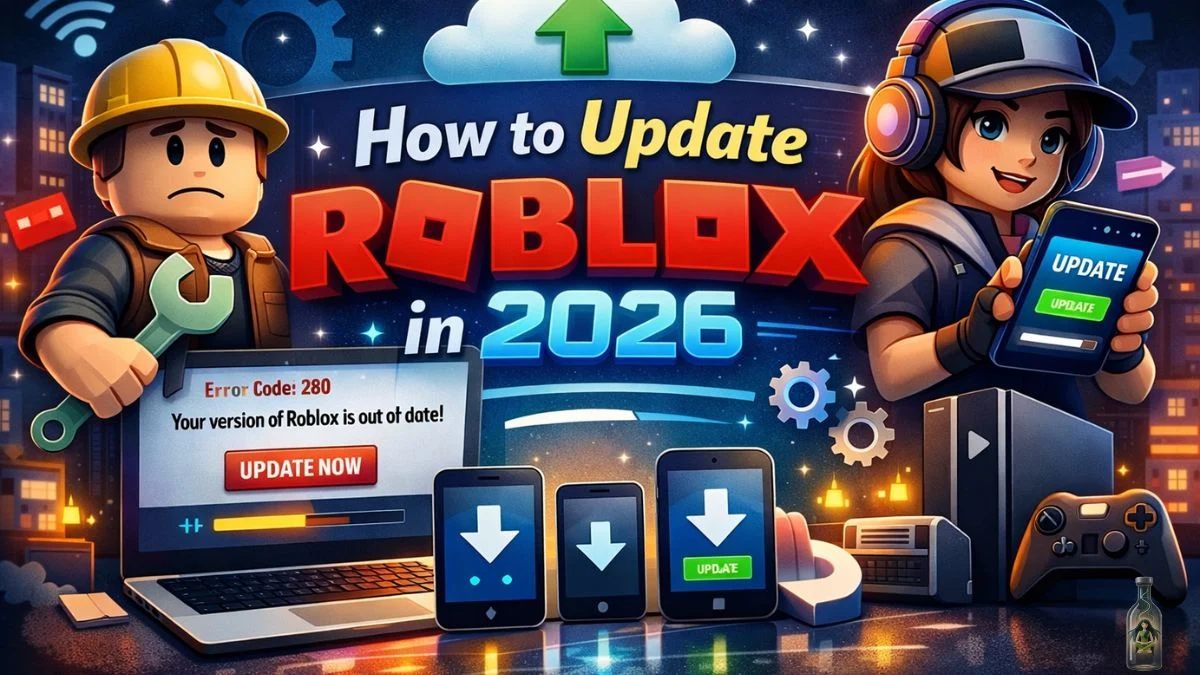
ROBLOX EM 2026 VAI MUDAR TUDO YouTube . Prepare For 2026 With Roblox Trends TikTok Img. How To Publish A Game On Roblox In 2026 Roblox YouTube . Roblox 2026 New Logo REVEAL First Look At The Future Shorts YouTube Hq2 . How To Update Roblox In 2026 Fix Error Code 280 On PC Mobile Xbox Roblox Update It.webp




12 Best Roblox Games To Play In 2026 Insider Ranked List 12 Roblox Top Games Of 2026.webp. Roblox At GDC 2026 Where To Find Us All Week Roblox. ROBLOX 2026 . Roblox 2026 YouTube Oar2 . Roblox In 2026 Play On Roblox NoFilter


Roblox 2026 Logo Evolve YouTube Oardefault . Roblox 2026 YouTube Oar2 . Act Up Uncensored Roblox Is It Possible In 2026 1200x630wa . A Roblox Movie 2026 Teaser Trailer YouTube . Roblox 2026 Logo Roblox YouTube Oar2



Codes Arise Crossover Mai 2026 Roblox GAMEWAVE . Roblox 2026 Insider Reveals Platform Evolution Safety 4000x4000bb . 2026 Parental Guide For Roblox Usage UnicMinds 2026 Parental Guide For Roblox Usage UnicMinds 600x602 . MERR Realistic Train Coupler NoFilter. LOGO Roblox 2026 YouTube Maxres2




Roblox A Ld M Ne Zaman A Lacak 2026 Roblox Son Durum Onedio S . Like And Subscribe If U Want The Roblox Logo 2026 Will Be That Oar2 . Want To Downoald Roblox In 2026 A Complete Guide Awaits 1200x1769 . Best Roblox VPN 2026 Security And Unlimited Access For Players VPN Roblox 2026 Terbaik Melindungi Privasi Dan Akses Tanpa Batas 3756ba1bbf . Roblox AI Revolution How Four D Objects And Social Gaming Are


15 Best Roblox Horror Games Of 2026 15 Game Roblox Horror Terbaik 2026 Paling Seram And Bikin Deg Degan 7f944699ce . 2026 Roblox YouTube Oar2 . Roblox 2026 Logo Mp3 Mp4 Download Clip Africa Com Mqdefault . So We Actually Got Some Good News Roblox Egg Hunt 2026 YouTube . Roblox A Ld M Ne Zaman A Lacak 2026 Roblox Son Durum Onedio S