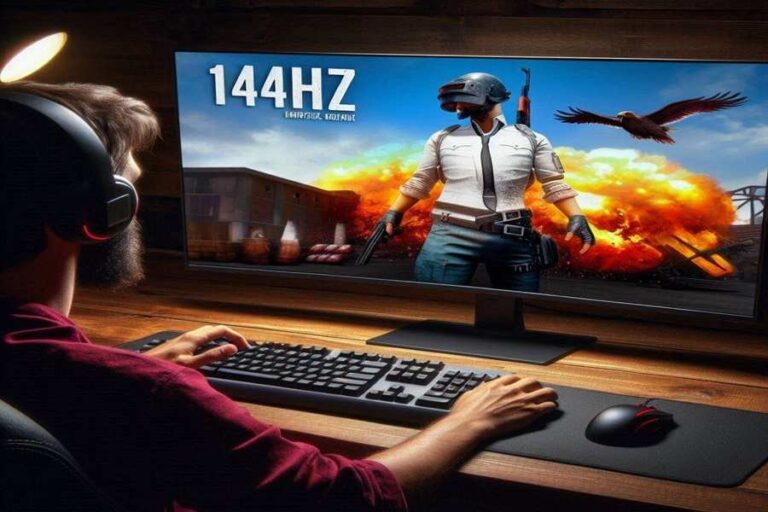
Ever wondered if upgrading to a 144Hz monitor truly makes a difference in your gaming experience? This comprehensive guide dives deep into whether 144Hz genuinely helps gaming, separating fact from hype. We explore the tangible benefits for both competitive esports enthusiasts and casual players who juggle gaming with jobs and family. Discover how higher refresh rates can improve responsiveness, reduce eye strain, and offer a smoother visual experience, giving you an edge or simply making your limited gaming time more enjoyable. We'll cover everything from necessary hardware to budget-friendly options, addressing common pain points like performance issues and smart upgrade choices. Get ready to understand if 144Hz is the upgrade you need to elevate your gameplay and maximize your fun without breaking the bank.
Related games- Guide Is a GTX 1080 For Sale Still Worth It in 2026
- GTA 6 on PS5 vs PS5 Pro: Which Console Wins for You?
- Guide to Roblox Savannah Life: Thriving in the Wild
- Guide To Roblox Slendytubbies 2026 Master Survival
- Guide How to Scripter Roblox Download Safely Now
Is 144Hz a game-changer for competitive gaming?
Yes, 144Hz is widely considered a game-changer for competitive gaming. The increased refresh rate allows for significantly smoother visuals, reduced input lag, and clearer motion. This means players can react faster, track opponents more accurately, and generally have a better understanding of rapidly unfolding situations, providing a tangible competitive edge in fast-paced titles like FPS games and MOBAs.
What is the real difference between 60Hz and 144Hz?
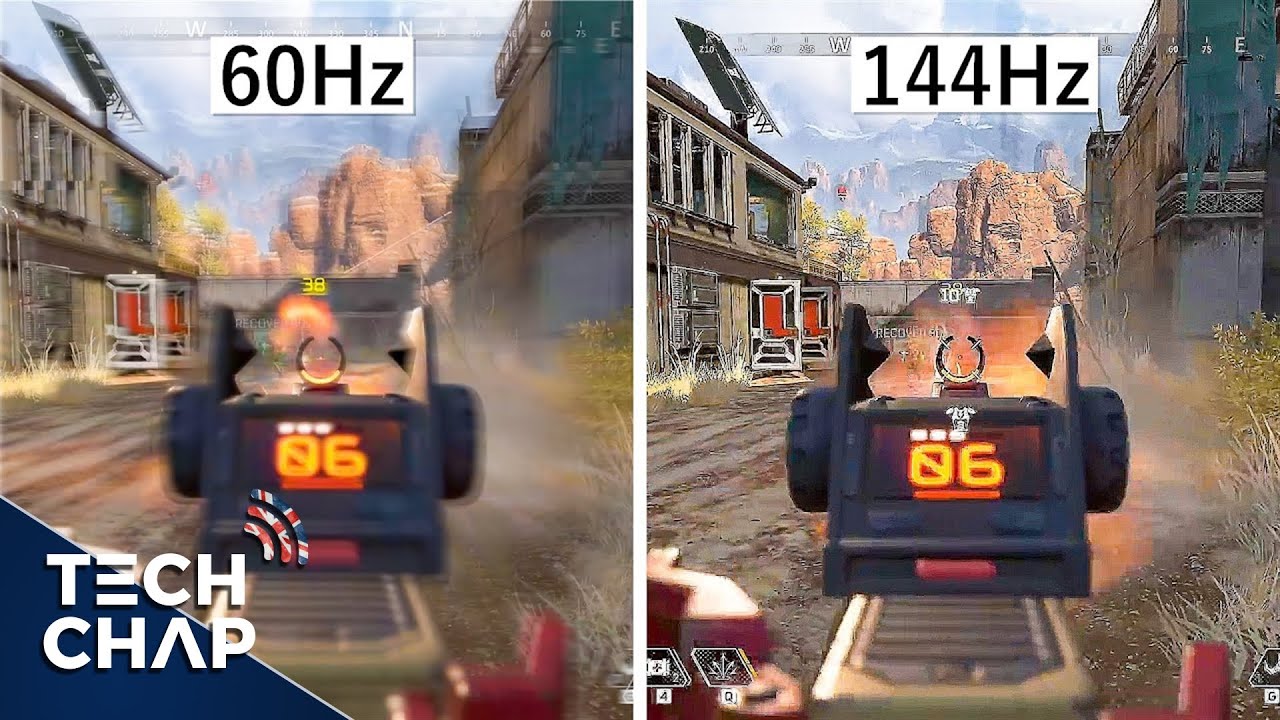
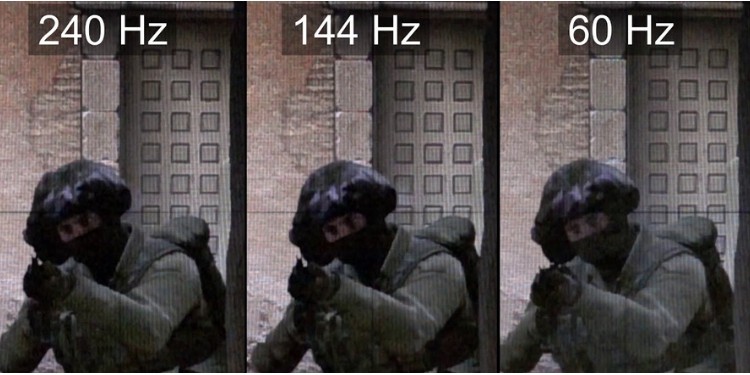
The real difference between 60Hz and 144Hz lies in how many times per second your monitor can update the image. A 60Hz monitor displays 60 frames per second, while a 144Hz monitor displays 144 frames per second. This higher refresh rate results in much smoother motion, less screen tearing, reduced motion blur, and a more responsive feel. Once experienced, the difference is incredibly noticeable, making gameplay feel significantly more fluid and immediate.
Do I need a powerful PC to run games at 144Hz?
Yes, to fully utilize a 144Hz monitor, your PC needs to be capable of consistently producing high frame rates (close to or above 144 FPS) in the games you play. This typically requires a mid-range to high-end graphics card (GPU) and a capable processor (CPU). If your PC struggles to hit high frame rates, a 144Hz monitor won't deliver its full benefit, though the smoother baseline movement can still be an improvement.
How much does a good 144Hz monitor cost in 2026?
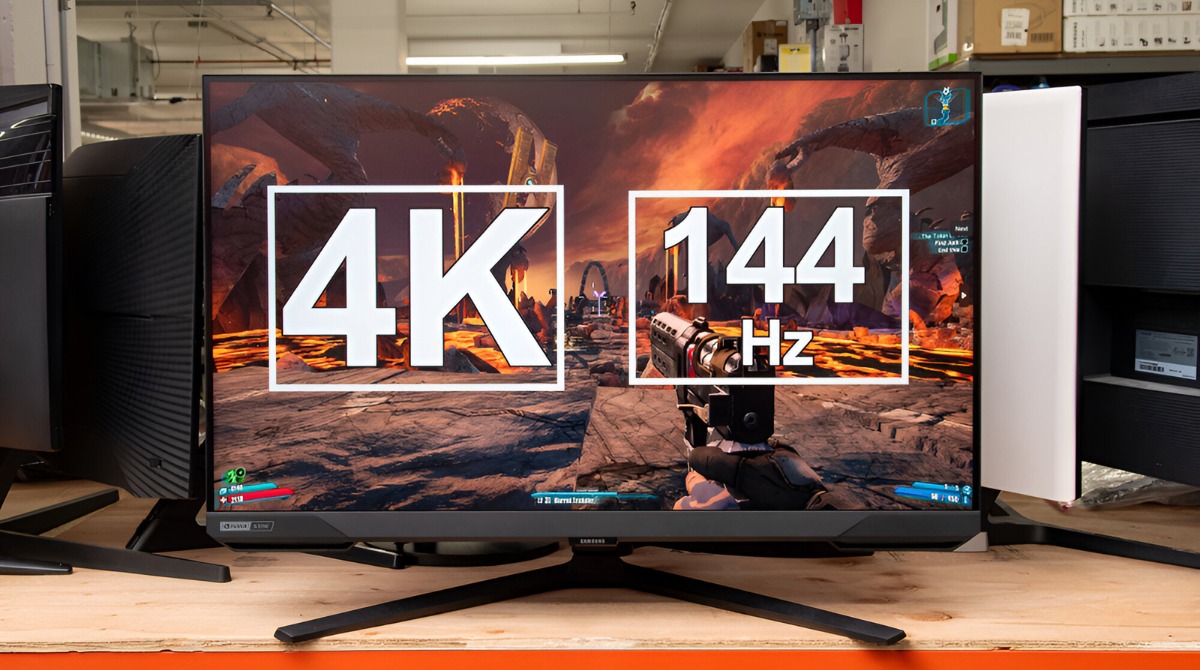
In 2026, a good 144Hz monitor can range significantly in price depending on features like resolution, panel type, and adaptive sync technology. Entry-level 1080p 144Hz monitors typically start around 150-250 USD, offering excellent value. Mid-range 1440p 144Hz options are usually 300-500 USD, while premium 4K 144Hz or ultra-wide variants can exceed 600 USD. Budget-friendly options are plentiful and offer great performance for the price.
Will 144Hz improve my reaction time in FPS games?
While 144Hz doesn't directly improve your inherent reaction time, it significantly reduces the visual delay between your actions and what you see on screen. By providing more up-to-date visual information and smoother motion, it allows your natural reaction time to be more effectively utilized. Many players find they can aim and react more precisely, giving the *impression* of improved reaction speed in fast-paced FPS games.
Is 144Hz noticeable for casual single-player games?
Absolutely. Even in casual single-player games, 144Hz offers a noticeably smoother and more immersive experience. Camera pans, character movements, and environmental animations all appear more fluid and natural. While the competitive advantage isn't a factor, the enhanced visual quality and reduced eye strain contribute to a more enjoyable and comfortable gaming session, making your limited gaming time more satisfying.
What cables are required to get 144Hz?
To achieve 144Hz, you typically need either a DisplayPort (DP) cable or a high-speed HDMI cable (HDMI 2.0 or newer). DisplayPort is generally recommended as it offers robust support for high refresh rates and resolutions. Ensure both your graphics card and monitor have compatible ports, and use a certified cable to guarantee stable performance at 144Hz, especially at higher resolutions like 1440p or 4K.
Hey fellow gamers! If you're anything like me, you're constantly looking for ways to get a little more out of your precious gaming time. Maybe it's a slight edge in your favorite competitive shooter, or perhaps just a smoother, more immersive experience after a long day at work. We juggle jobs, families, and life, so when we sit down to game, we want it to be worth every second. One question that pops up again and again in gaming communities, from Discord channels to Reddit threads, is a simple but impactful one: does 144Hz help gaming? It's a common pain point for many who are considering a hardware upgrade on a budget, wondering if the investment truly pays off. You've heard the buzz, seen the pros using high refresh rate monitors, but does it really translate to better performance for us, the everyday gamers?
For years, 60Hz monitors were the standard, delivering 60 frames per second. But with advances in technology and the ever-growing demand for competitive performance, 144Hz monitors have become increasingly popular. According to recent US gaming stats, with 87% of gamers playing regularly and averaging over 10 hours a week, optimizing that experience is key. Many of us aren't just looking for flashy new tech; we're seeking genuine improvements that enhance relaxation, skill-building, or social play. This guide is designed to cut through the hype and provide practical, problem-solving insights into whether a 144Hz monitor is the right move for you. We’ll break down what 144Hz means for your gameplay, what you need to get started, and if it’s truly worth your hard-earned money in 2026. Let's dive in and see if 144Hz really helps gaming.
What Exactly is 144Hz, and How Does it Compare to 60Hz?
At its core, 144Hz refers to the refresh rate of your monitor, meaning it can display up to 144 frames per second. Think of it like a flipbook; a 60Hz monitor flips 60 pages per second, while a 144Hz monitor flips 144. This higher rate results in significantly smoother and more fluid motion on screen. The difference between 60Hz and 144Hz is immediately noticeable once you experience it, especially in fast-paced games. It’s not just about seeing more frames; it's about reducing the delay between when your GPU renders a frame and when your monitor displays it, leading to a much more responsive feel.
For gamers balancing life, this means less visual tearing, reduced motion blur, and a clearer picture during rapid movements. This clarity can be crucial when tracking enemies in a shooter or making precise movements in a strategy game. The jump from 60Hz to 144Hz is one of the most impactful upgrades you can make for visual fidelity and responsiveness.
Does 144Hz Truly Enhance Gaming Performance for the Average Player?
Yes, 144Hz can significantly enhance gaming performance for many players, not just esports pros. For the average gamer, who often seeks relaxation and skill-building, the benefits include improved target tracking, better situational awareness due to clearer motion, and a feeling of greater control. While it won't magically make you a pro overnight, the increased responsiveness means your inputs are reflected on screen faster, which can translate to quicker reactions and more accurate aim. This is especially true in competitive titles like Valorant, Apex Legends, or Call of Duty, where split-second decisions matter.
Beyond competitive advantages, 144Hz simply makes gaming feel better. For those balancing gaming with demanding schedules, every moment of playtime should be enjoyable. The smoother visuals contribute to a more immersive experience, making games like Cyberpunk 2077 or Alan Wake 2 feel incredibly fluid, even if they aren't competitive. Many gamers report feeling less fatigued after long sessions due to the reduced choppiness, which is a big win for adult gamers.
Which Game Genres Benefit Most from a 144Hz Monitor?
While all games can look and feel better on a 144Hz monitor, certain genres reap the most substantial rewards. First-Person Shooters (FPS) like Counter-Strike 2, Overwatch, and Rainbow Six Siege are prime examples, where the ability to spot and track fast-moving targets with minimal blur can be a decisive factor. The improved clarity allows for more precise aiming and faster reaction times.
Similarly, fast-paced racing games (e.g., Forza Horizon, F1) and action-adventure titles (e.g., God of War, Spider-Man Remastered) also benefit greatly from the smooth motion, making high-speed sequences and fluid combat feel incredibly natural. Even strategy games or MOBAs like League of Legends or Dota 2 can feel more responsive and allow for quicker cursor movements and target selection, though the impact might be less dramatic than in an FPS. Essentially, any game where quick visual updates and precise inputs are key will see a noticeable boost.
What Hardware Do I Need to Run Games at 144 Frames Per Second?
To fully utilize a 144Hz monitor, your gaming rig needs to be capable of outputting 144 frames per second (FPS) or close to it in the games you play. This primarily depends on your graphics card (GPU) and processor (CPU). A mid-range to high-end GPU from the last few generations (e.g., NVIDIA RTX 3060/4060 or AMD RX 6700XT/7700XT or better) is usually sufficient for hitting 144 FPS in many popular titles at 1080p or 1440p settings. Your CPU also plays a role, especially in CPU-intensive games or at lower resolutions, preventing bottlenecks.
Beyond your PC's internal components, you'll need the right cable. DisplayPort (DP) is the recommended connection for 144Hz and higher refresh rates, especially at resolutions above 1080p. HDMI 2.0 or newer can also support 144Hz at 1080p and sometimes 1440p, but DP generally offers more bandwidth and reliability for higher refresh rates. Always check your monitor's and GPU's port specifications.
Is the Upgrade to 144Hz Worth the Investment for Casual Gamers?
Absolutely, the upgrade to 144Hz can be incredibly worthwhile even for casual gamers who prioritize relaxation and fun over competitive ranks. While a competitive edge is a primary driver for many, the sheer improvement in visual fluidity and responsiveness enhances the overall enjoyment of *any* game. Imagine exploring the vibrant worlds of a cozy game or tackling a new RPG with silky-smooth camera movements and crisp animations – it simply feels better.
For gamers balancing life, investing in a 144Hz monitor means maximizing the quality of their limited playtime. The reduced motion blur can also lead to less eye strain during longer sessions, a valuable benefit for adults who might already spend hours staring at screens for work. With budget-friendly 144Hz monitors becoming increasingly common, the barrier to entry is lower than ever, making it a smart value-for-money upgrade that genuinely improves the gaming experience.
Can 144Hz Reduce Eye Strain and Improve Overall Comfort During Long Sessions?
Many gamers, especially those averaging 10+ hours a week, report that 144Hz monitors contribute to reduced eye strain and improved comfort during extended gaming sessions. The primary reason is the smoother motion and reduced flickering. When a monitor refreshes at 60Hz, the individual frames are held longer, and the transition between them can appear more abrupt, leading to a subtle flicker or judder that the eyes unconsciously work to compensate for.
At 144Hz, the rapid succession of frames creates a far more continuous and fluid visual experience. This seamless motion reduces the effort your eyes exert to track movement, leading to less fatigue over time. Combined with adaptive sync technologies like FreeSync or G-Sync, which eliminate screen tearing and further smooth out gameplay, a 144Hz monitor can genuinely make your gaming sessions more comfortable and enjoyable, which is a major benefit for busy adult gamers.
How Do I Set Up My 144Hz Monitor Correctly for Optimal Gaming?
Setting up your 144Hz monitor is usually straightforward but requires a few key steps to ensure you're getting the full benefit:
Use the Right Cable: As mentioned, DisplayPort is generally preferred. Connect one end to your GPU and the other to your monitor. For HDMI, ensure it's HDMI 2.0 or newer for 144Hz support.
Update Graphics Drivers: Always make sure your GPU drivers are up-to-date. Visit NVIDIA or AMD's official website to download the latest versions, as these often include performance optimizations and bug fixes.
Set Refresh Rate in Windows:
Right-click on your desktop and select 'Display settings'.
Scroll down and click 'Advanced display settings'.
Choose your 144Hz monitor from the dropdown if you have multiple displays.
Click 'Display adapter properties for Display [X]' (where X is your monitor number).
Go to the 'Monitor' tab and select '144 Hertz' or the highest available refresh rate from the 'Screen refresh rate' dropdown menu. Click Apply and OK.
Enable Adaptive Sync (Optional but Recommended): If your monitor and GPU support FreeSync (AMD) or G-Sync (NVIDIA), enable it in your GPU control panel (NVIDIA Control Panel or AMD Radeon Software). This synchronizes your monitor's refresh rate with your GPU's frame rate, eliminating tearing and stuttering.
Adjust In-Game Settings: Some games have their own refresh rate settings. Always check and set them to 144Hz if available. Ensure your game's graphics settings are optimized to achieve frame rates close to or above 144 FPS for the best experience.
These steps ensure your system and monitor are communicating effectively to deliver that buttery-smooth 144Hz experience.
Are There Any Downsides or Common Misconceptions About 144Hz Monitors?
While 144Hz monitors offer significant advantages, there are a few considerations and misconceptions to address. The main
Improved responsiveness and reduced input lag, significantly smoother visuals for competitive advantage, reduced eye strain during extended sessions, crucial for esports and beneficial for all genres, requires compatible GPU and display cables, offers a noticeable upgrade from 60Hz, budget-friendly 144Hz monitors are widely available, enhances overall gaming enjoyment and immersion.
35

14 Best Gaming Monitors Of 2026 144Hz 4K Models For Stunning Gameplay Top 144hz 4k Gaming Monitors O7xv7 . 144Hz Vs 165Hz Vs 240Hz Gaming Monitor Guide 2026 Frontech Frontech Frontech Gaming Monitor Which Refresh Rate . Best 144Hz Gaming Monitors 2026 Top Rated 144 Hz Displays Best 144hz Monitor Guide That Shows The Top Best Gaming Monitor Model 1024x576 . 144Hz Vs 240Hz Gaming Which Refresh Rate Is Better YouTube . Is A 144hz Monitor Worth It For Gaming Update 02 2026 Is A 144hz Monitor Worth It For Gaming 2



144Hz Vs 240Hz Vs 360Hz Monitors Which Refresh Rate Should You Choose ChatGPT Image Nov 18 2025 09 56 39 PM . 60hz Vs 144hz Vs 240hz The TRUTH About High Refresh Monitors The . 144Hz Vs 240Hz Vs 300Hz Gaming Monitors Ultimate Test With 3K Hours . Best 240Hz 1440p Gaming Monitor Guide 2026 Futuristic Gaming Setup With. Best 144Hz Monitors 2026 Watch Before You Regret Buying YouTube

Top 3 M N H Nh Gaming 144Hz D I 3 Tri U Ng Ti N Top 3 Man Hinh Gaming 144hz Cover . How To Setup 144Hz Monitor For Gaming For Optimal Performance How To Setup 144hz Monitor For Gaming 1759537816 . 5 Best 144Hz Gaming Monitors 2024 77697 1920 . These 144Hz Monitors Help You Win Games Alienware Aw2523hf 1682100584 . 10 Best 144Hz Laptops 2026 Tested For Smooth Gaming Best 144Hz Laptops 1024x576


10 Best Gaming Monitors For 2026 Market Research Telecast SL500 . What Does 144Hz Mean Everything You Need To Know How To Choose The Right Gaming Monitor 1024x576 . 144Hz Vs 60Hz Which Refresh Rate Should I Choose Simple Best Gaming Monitors . How To Set Monitor To 144Hz Robots Net What Is The Best 144hz Gaming Monitor 1701871877 . Is 144Hz Good For Gaming Unleash Ultimate Smoothness 144Hz Good For Gaming 300x200


5 Best 144Hz Gaming Monitors In 2023 Sddefault . Is A 144Hz Monitor Worth It Simple Guide Display Ninja Best USB C Gaming Monitors 1024x576 . 144Hz Vs 60Hz Which Refresh Rate Should I Choose Simple New Monitors . Best 1440p 144Hz Monitors In 2026 Top Picks Ranked 9meters Lg 27 Inch Monitor 600x400 . Does HDMI Support 144Hz Silkland Does Hdmi Support 144hz



Best 1440p 144Hz Monitors For Gaming 2026 Ultimate Guide Best 1440p 144Hz Gaming Monitors 768x432 . 144Hz Monitor Review Comparison 2026 FinalCheck 144 Hz Monitor Man Pc Gaming 1024x683 . 11 Best Gaming Monitors In 2026 144Hz 4K And Unmatched Performance Top 2026 Gaming Monitor Picks Kqts5 . Best Monitor For Console Gaming 2026 Expe Gaming PC Guru E9faa16e 9733 440e Ab7c PT0 SX970 V1 . Best 1440p Monitor For Gaming 2026 144Hz Gaming PC Guru Best 4k Monitor For Gaming 800x500


Is 144Hz Good For Gaming Unleash Ultimate Smoothness 144Hz 768x512 . What GPU Can My Motherboard Support PC Guide 60hz Vs 144hz Vs 240hz . Your 144Hz Monitor Is Stuck At 60Hz Here S The Fix Switchblade Gaming How To Enable 144hz. Snapklik Com HP Victus 15 6 Inch FHD 144Hz Gaming Laptop Intel Core 81obPsMhewL . How To Set Monitor To 144Hz Robots Net 8 Best 144hz 4k Gaming Monitor For 2023 1701268682